

The real action happens in the hallways
A five minute in-person conversation at a conference creates a stronger connection than five Zooms. Whether I’m trying to close a deal, establish a partnership, or make an important connection, the velocity from an in-person interaction is always higher. The right conference is a goldmine, because it concentrates the people you’re trying to meet and the social contract is such that it’s not weird to talk to strangers.
Recently, I led two projects—one for the Kendra Scott Women’s Entrepreneurial Leadership Institute at UT-Austin and the other for the UK Department of Investment & Trade—on how to get the most out of a conference. Their teams found these tactics useful, I’m betting you will too. Not every tip will be right for you. That’s fine. Pick what works best for your goals, your energy, your style.) Below are the mindsets, tactics, and hacks I use to squeeze real value from them. I broke them up into three parts, divided by what to do before, during, and after the conference.
Before the Conference
1. Presenting > Attending
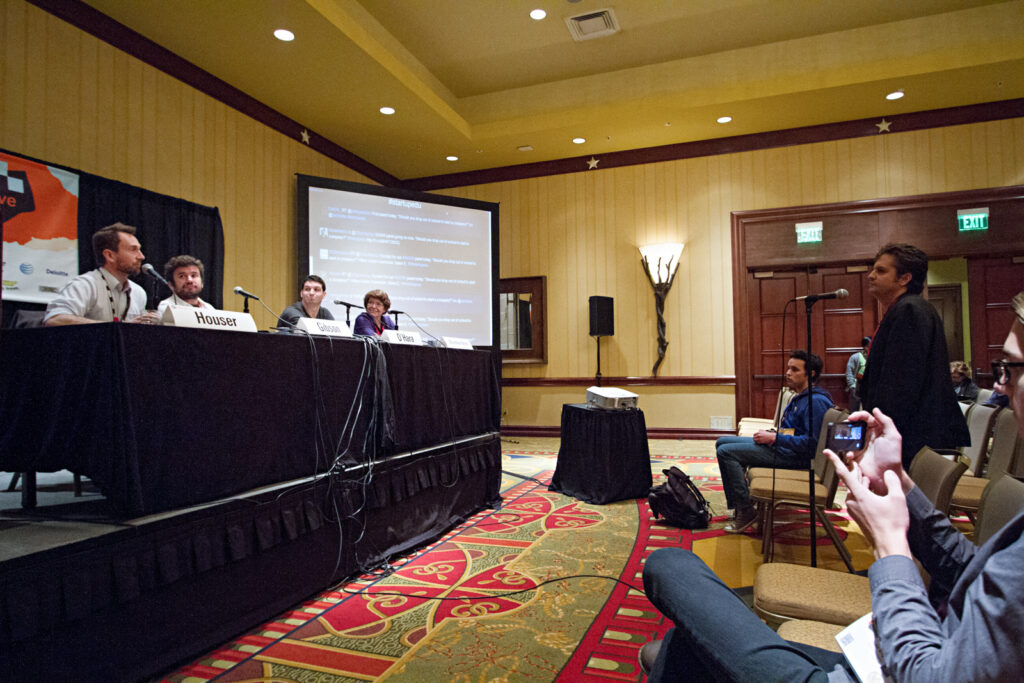
If you can speak, speak. It allows you to spread your work one-to-many (from on stage) instead of one-to-one (in hallway conversations). The people that your work resonates with will approach you afterwards. Presenters usually get free or discounted registration as well. Easiest way to hear about speaking opportunities? Get on the conference email list. Submission calls often come months in advance.
2. Mention Your Attendance on Social Media Beforehand
Something as easy as “I’m heading to [conference name] next month, who is attending and wants to meet up?” increases the odds your surface area of opportunity for making good connections.
3. Use the Attendee Directory for Pre-Conference Outreach
If the conference shares a list of attendees, scan it. Reach out to folks you admire or want to work with in the weeks leading up to the event. A simple message—“Saw you’re going, would love to connect in person to talk about [x]”—makes it easier to start a conversation when you cross paths later.

4. Don’t Schedule Meetings
I rarely try to set up fixed meetings before the conference because it’s hard to know which ones will be the most valuable. Instead, I send messages ahead of time saying, “Saw you’re attending [conference], I’ll be there too—hope we get to chat.” It gives the interaction a head start if we run into each other, and it gives me an excuse to follow up afterward if we don’t.
During the Conference
5. Switch Your Mindset
Most people treat the sessions as the main event and the breaks as filler. I reverse that. Sessions are downtime. That’s when I rest, scroll, and jot down notes. During breaks, I go into action, introducing myself to people who look like my target audience.

6. Don’t Talk to People You Already Know
You already have access to your coworkers and people you already know. Make sure you don’t spend your time at a conference standing around with people you could talk to any other day. Talk to someone new.
When I bring my team to a conference, I tell them that I don’t want to see them sitting next to each other at meals. One of my staff met the CTO of The White House this way.
7. Arrive Early or Stay Late to Networking Events
Most people show up to happy hours in the middle, right when it’s loud, crowded, and hard to break in. I go early, before the room fills up, or late, when things wind down. In both cases, people seem more open to meeting people than in the middle of a bustling event.
8. Don’t Be Afraid to Suggest an Impromptu Meal
This is high effort if you’re an introvert, but you’d be surprised how often people are up for a last-minute lunch or dinner. Just say, “I’m heading to grab food—want to join?” Keep it simple. Pro-tip: most restaurants around conference venues are terrible, so don’t waste energy trying to find a great restaurant.
9. Test Your Introductions in Real Time
Conferences are a perfect place to trial new approaches to answering the “what do you do?” question. I explain my work in different ways and watch how people react. Which version leads to more curiosity or follow-up questions? That feedback gives me data on how to sell and market my work.

10. Give Yourself Permission to Introduce Yourself
This is one of the few environments where it’s normal to walk up to someone and say hi. So do it. You don’t need a clever opener or some perfect reason. A simple “Hey, I’m Cam—what brings you here?” works fine. Everywhere is fair game. I’m still friends with a guy I met on an escalator at SXSW.

11. Ask People What They’re After
One of the easiest ways to have a great conversation is to ask, “What are you hoping to get out of this conference?” or “Who are you hoping to meet?” People appreciate the chance to share—and if you can help, even better. I’ve found that leading with generosity usually causes others to return the favor.
12. Don’t Burn Yourself Out
You don’t need to stress yourself out trying to maximize every moment. You don’t need to talk to everyone. Pace yourself. A few real conversations are better than 50 surface-level exchanges. Running yourself ragged is not the outcome you want.
13. Set Expectations for Your Team
If you’re leading a team, be explicit about the goals for attending the conference. Generating leads, growing networks, finding new customers, etc.
14. Run Team Check-Ins
Conduct short huddles each morning or end-of-day to share good learnings, what strategies are working, and any promising connections worth deepening.
15. Post up Strategically
Hotel lobbies, hallway couches, coffee lines—all of them are better networking spaces than you’d expect. I’ll pick a high-traffic spot and if someone takes a seat nearby, I’ll strike up a conversation in between catching up on emails.
16. Be a Connector
If you meet someone interesting and they’d benefit from knowing someone else you talked to, connect them. People remember the person who introduced them to someone useful.
17. Take Notes at the End of Each Day
I open up ChatGPT and dictate my learnings, prospects, and promising encounters of the day, then ask it to organize them into bullet points. I copy those into my notes app. That helps me remember names, follow-ups, and next steps while it’s still fresh.
18. Say Yes to Serendipity
Don’t overschedule. Leave room for randomness. Some of the best connections I’ve made came from simply being in the right place at the right time—and being open to it. This is how I met Tim Ferriss and the owner of the Minnesota Vikings. A colleague of mine met the CMO of Lululemon waiting in line for barbecue.

After the Conference
19. Leverage the “Missed You” Follow-Up
When you don’t connect with someone you messaged ahead of time, use that as an easy post-event follow-up: “Sorry we didn’t cross paths—still up for a quick chat sometime?”Confession time: This works so well I’ve done this even when I didn’t actually attend the conference.
Bonus Ideas
20. Host a Private Roundtable
If you want to do something more ambitious, organize a small, invite-only roundtable. Doesn’t need to be complicated—just a focused conversation with smart people. VIPs often prefer curated groups over big chaotic mixers. And if you’re the one organizing it, you become a person worth knowing. Here are examples: 1, 2.

21. Update Your Social Headers
Social platforms make changing your headers more of a hassle these days, so I don’t do it anymore. But I still see people following this practice.
Good luck!
Related: The Art of Approaching Strangers: Lessons from Humans of New York How to Shoot Your Shot with an Important Person
Thanks to previous readers: Dominik Gmeiner
Get my best stuff in my newsletter: