
How a regular person used ChatGPT to solve a decade-long problem
File Under: AI is more than emails and search queries.
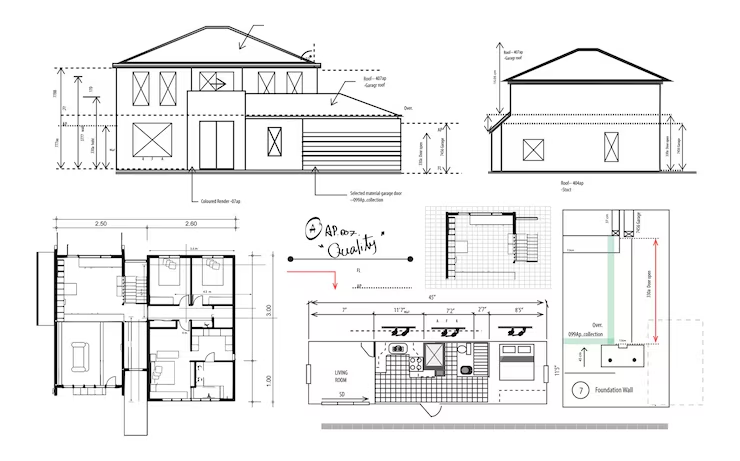
My friend Nicole is an architecture nerd. She’s the kind of person who studies floor plans for fun. One day, she drove by a house under construction that was so beautiful she had to pull the car over, stand on the sidewalk, and soak it in. The architect happened to be onsite that day. Nicole struck up a conversation. She, her husband, and her two kids moved in two months later. The beauty of the outside of the house, however, blinded her to a big problem inside.
Weeks after moving in, they discovered that the house had awful, inconsistent temperature control. Nicole would be sweating in the living room while daughter #1 shivers on the toilet. Bundling up just to go the bathroom gets old quickly. No one in the family knew anything about air conditioning so they started haphazard experimenting with configuring the AC in different ways. This leads nowhere.
So they called in the professionals. Over the next ten years, various HVAC technicians visit the house. None were able to get the draft and the airflow to a pleasant balance.
Nicole got an idea. She had the architectural plans (she’s the type of person who keeps the plans, remember) and out of sheer desperation, uploaded them to ChatGPT. She explains the problem and ChatGPT analyzes the air flows throughout the house. The plans had precise dimensions and measurements, so GPT could model how air was moving through the different rooms and where the pressure imbalances were happening.
ChatGPT’s recommendation was absurdly simple: keep the door to the HVAC room cracked open. Nicole gave it a shot. The temperature balanced out. After a decade of experts shrugging their shoulders and family discomfort in what is supposed to be the most comfortable place in one’s life, the fix was leaving one door open.
This story rehashes two insights we talk about a lot in this newsletter. One is that more often than not, it’s wise to throw your problems at AI. It costs only a few seconds of your life and fractions of a cent. The second is that AI can occasionally do wonders with old data you have lying around. Large corporates aren’t wrong when they say “data is the new oil.” AI unlocks value out of old data.
Most people don’t think of the documents they have—floor plans, spreadsheets, old reports—as something AI could work with. Nicole did. She had architectural plans with precise measurements, uploaded them to ChatGPT, and got a solution that had eluded professionals for a decade.
The question—what data do I already have?—is worth asking more often.
Thanks to readers of early drafts: Rik Van den Berge, Mak R.