
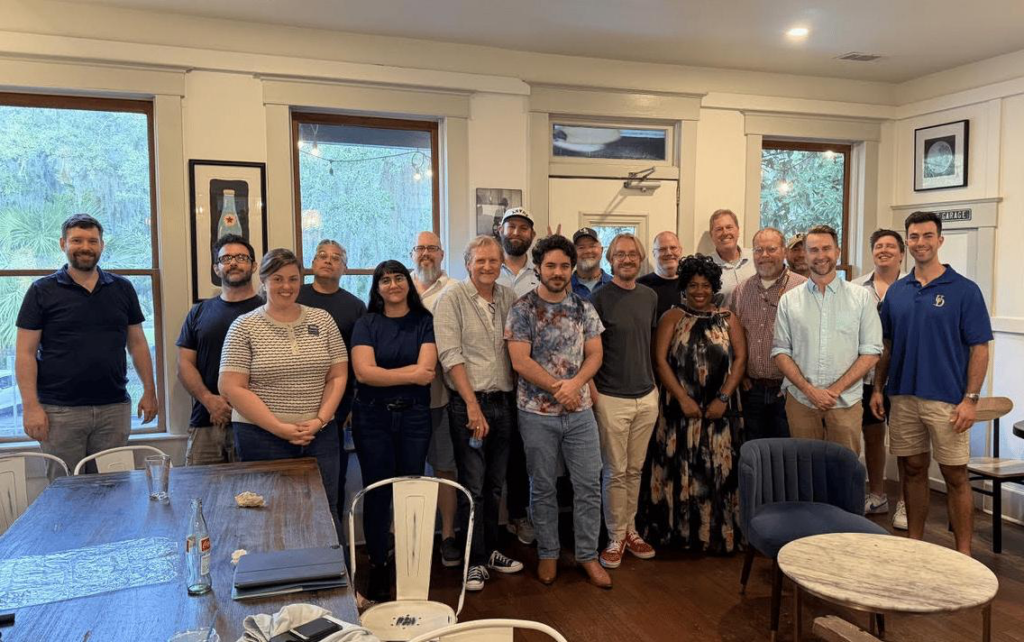
It’s not a normal thing to hang out in a room full of people talking about AI. You might chat about it with friends every once in a while or scroll through Reddit and X. But those are sources of information, not sources of community.
Given how early we still are (yes, we are still early), geeking out about what you and others are doing with AI is a joy.
We’ve now run two AI builder meetups in Savannah. They were a huge hit so I’m sharing the format in case you’re interested in running one of your own.
A note on the name: “AI builders” is a good term because it welcomes technical and non-technical people. One of the seismic shifts of AI is that non-technical people can build now. So call them “AI builders” and keep the door wide open.
The hardest part is getting people to show up. Especially the first time. The way you do it is not posting on socials and hoping. It’s sending DMs and emails to individuals. “Hey, we’re doing this thing. You should come if it’s interesting to you.” The personal invite is why people came to ours. We were emotionally prepared for underwhelming attendance at the first one, maybe three or four people. About fifteen showed up, and about fifteen came back for the second.
If you don’t know many AI builders yet, show up at other people’s events first. You’re paying it forward by being present and supporting the existing community. Then, with the organizer’s permission, invite those attendees to yours.
Pick a Tuesday, Wednesday, or Thursday. People are gearing up on Monday and by Friday it’s weekend time. Start at 5 or 6 p.m. so people with day jobs can make it. Get a place with good parking and a semi-private space. We got the upstairs at a coffee shop.
Here’s the run of show:
Start the event fifteen minutes after the official time. If you say 6, don’t actually welcome everybody until 6:15. That gives the latecomers a chance to get there without missing anything.
6:15: Warm welcome, then a speed round of intros. Get everyone in a circle and have each person say their name and what they’re working on. Keep it quick. This is really useful for people with shared interests to find each other and it reduces the feeling that you need to know a ton of people to belong there.
Lightning talks: two to four speakers, five minutes each. Ask a few people ahead of time if they’d be willing to talk for five minutes about what they’re building. No prep, no slides, no screen sharing, no plugging in laptops. At the first one, we had two guys building local AI models that run entirely on-device, a woman developing assistive technology for people with degenerative diseases, and two guys who’d just funded a video game on Kickstarter where you fight enemies by hurling insults at them. The story is what makes it compelling: why they’re building it, what motivated them, how they learned. Five minutes, no Q&A.
Then you’re done with the formal part. The whole structured section only took about half an hour, which people really appreciate. Now it shifts back to chit chat, but the chit chat is way easier because you just did speakers and everyone’s introduced themselves. The ice is broken. People have common ground.
Create a WhatsApp group. After you create the group, you have the option to generate a QR code. Walk around and encourage others to scan it, and now you have a direct line to the community instead of rebuilding an attendee list every time.
The format works well for the community because it helps people make connections and learn new things in half an hour. But you as the organizer get something extra. Hosting leads to friendships, work opportunities, and introductions that wouldn’t have happened if you were just another attendee. Everything runs through the person who put the room together.
Thanks to readers of early drafts: Matt Beebe, Rik van den Berge