AI pulls work to the average. The expert who experiments wins.
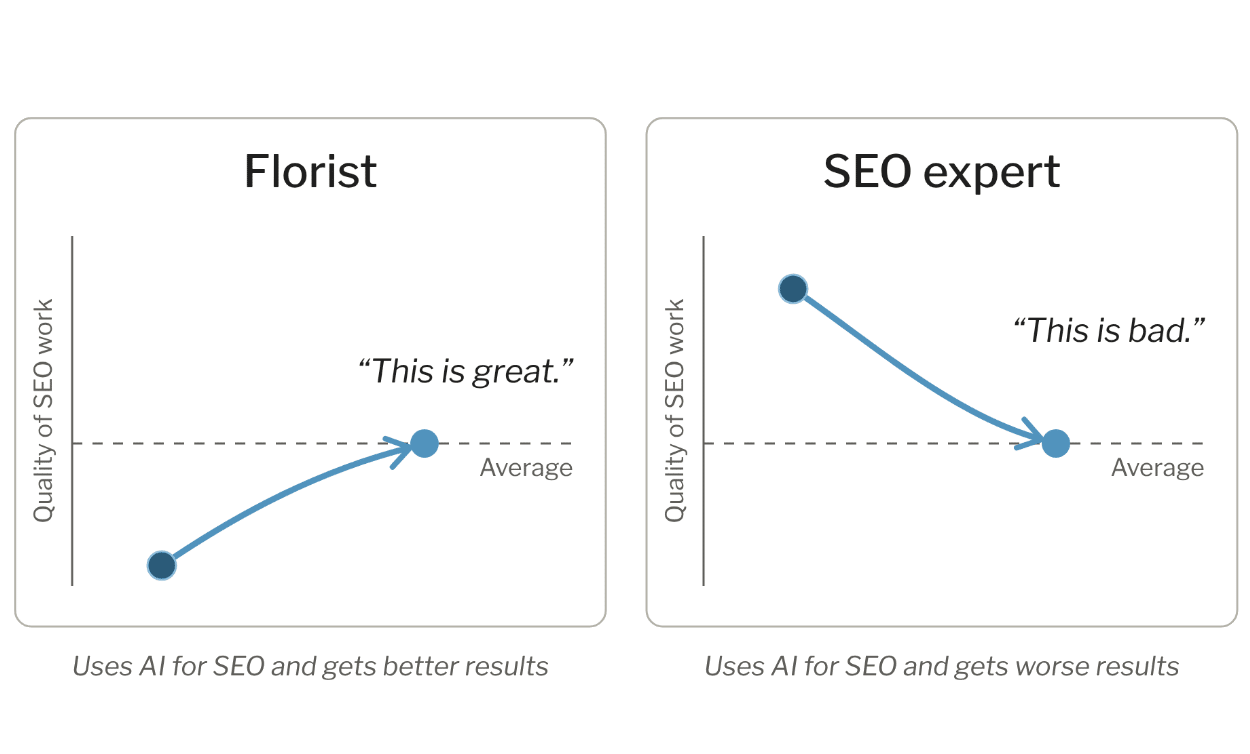
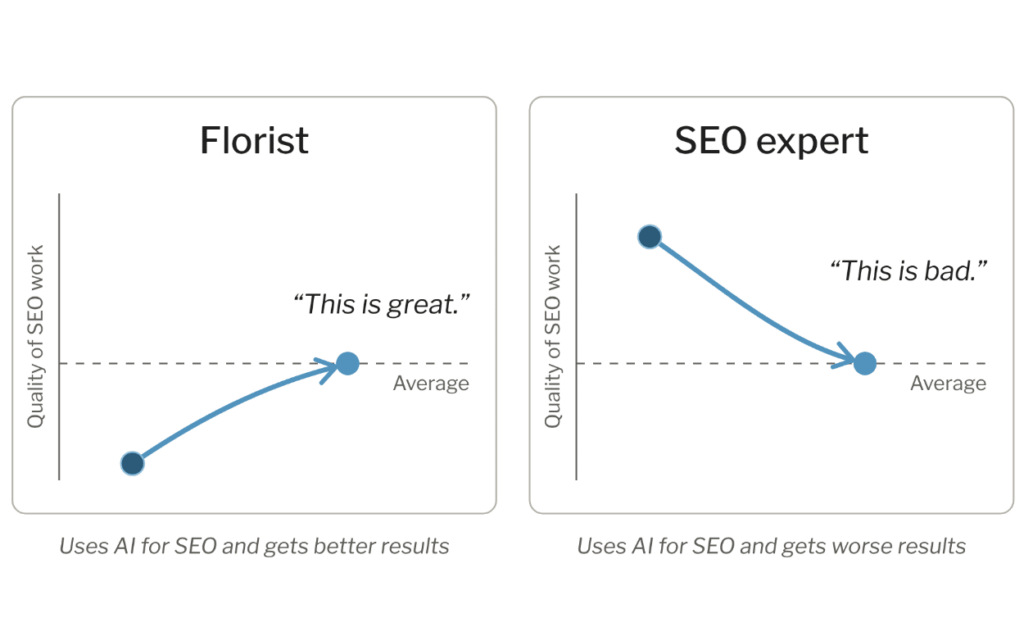
A lot of AI stuff pulls you to the average. If you’re really bad at something, AI will lift you closer to it. If you’re an expert, it goes the other way and draws your work down, because average is what it gives you by default.
Take a florist who uses AI to get some basic help with SEO. They’ll improve. Now take someone who is an expert at SEO and have them hand the same job to the same tool. For them, it’s going to seem basic and unsophisticated, and it makes their work look like everyone else’s.
I think this is a big part of why people debate about whether AI is good enough. They’re all coming from their own perspectives. The experts are saying it’s crap, and from where they sit, they’re right. The trouble is that beginners sometimes listen to the experts. For beginners, this presents one hell of an opportunity. The world’s knowledge has been distilled into this technology, and you get it for peanuts. While it’s not obvious where the development of AI will go, it’s undeniable that there’s something worth exploring here. I’m still taken aback by people who don’t see this.
Below the line
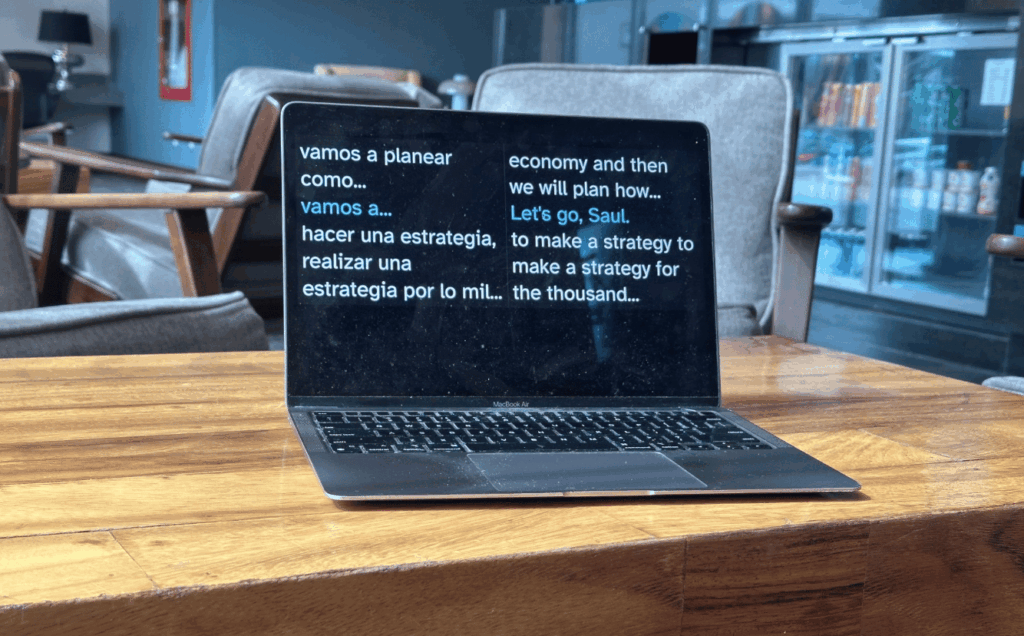
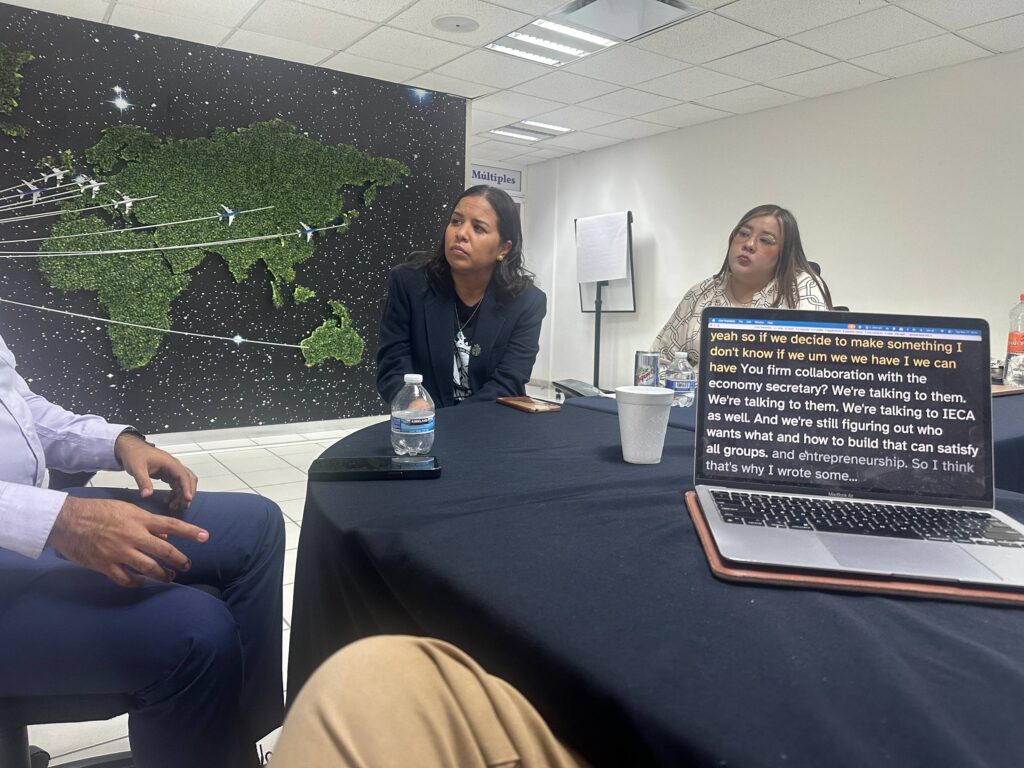
I’ve been the florist. Recently in León, Mexico, I was struggling to keep up in meetings that were all in Spanish, so later that night I built a little app that puts English captions on my screen while people talk. I don’t code. For a guy who doesn’t code, this is mindblowing. If I were an expert software developer, I would look at what I made and not be impressed. But I’m just a guy who had an idea and turned it into software as an afterthought at the end of a long day.
The dangerous part for the beginner comes later. AI will improve things for you, and then at some point you stop improving, or you start doing things that aren’t valuable, and you can’t recognize when you’ve hit that point. I call this domain blindness. If you’re a beginner with a brand new skill, the experts can tell what’s missing and you can’t.
In the US, you can protest your property taxes. You gather comparables—other homes near yours—to show that your appraisal is too high and convince the county to lower the taxable value of your home. It’s an administrivia-laden bureaucratic task, the exact kind of thing I chafe at, so getting myself to do it was like pulling teeth. Then it occurred to me that I could get Claude Code to take a crack at it. Claude did the research, assembled it, and worded everything correctly. I reviewed the email and hit send. Months later, I got a call from the county saying they’d received my protest, and they offered me a very favorable reduction. I saved thousands on my property taxes. Did I do the best property tax protest in the history of property tax protests? No. I’d never done one before. AI got me to good enough, and I have no way of knowing how much I left on the table.
Above the line
Experts have the other half of this. They have an understanding of what “good” is. Some people call this taste or judgment. I call it discernment, and it comes from knowing the domain. So they can see that what AI hands them is average, and a lot of them stop there. (Everyone’s worried about AI coming for their jobs, too. Upton Sinclair had a line about how hard it is to get a man to understand something when his salary depends on him not understanding it.)
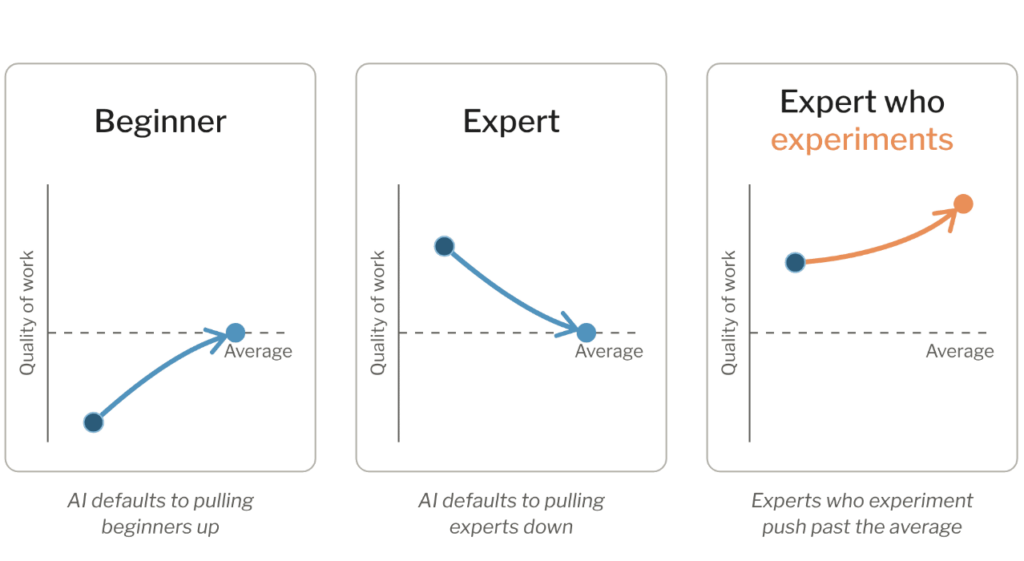
I know experts with deep domain knowledge who still aren’t doing much with AI. They don’t think to use it in interesting ways. Beginners often do, because they are unaware of what’s already been tried or the fashions of the industry. And the cost of experimentation has gone way down. You can run tons of experiments on a $20 a month AI plan. The experts who will get the most out of AI are the ones who experiment with it.
I’ve been that expert who experiments. With GPT-4o, I was able to win a number of government grants. Part of that was knowing about these grants in the first place. Most people weren’t aware of these opportunities or how to go after them. Large-scale grants like these usually take a team of four or five to put together a great submission. Government grants need to be written in a specific way, with dry, technical language. So I took successful grants I’d written before and threw them into 4o, so it could understand the grant requirements and the descriptions of the work I’d delivered in the past. From there, I asked it to map that against new grant opportunities. Because I knew what the funders wanted to see and I knew what “good” was, I was able to win these grants without bringing in researchers and methodology experts. For a window, I had quite an edge. Now everyone has the same tools, and expectations have shifted. At the time, almost no one was using them this way.
So if you’re a beginner, go nuts with AI. The gains come quickly. Whenever you enter a new domain you learn really fast, because you have a lot of ignorance to burn through. Just know that at some point you’re going to cross the domain blindness threshold, and you might not know it even happened.
If you’re an expert, you should be using AI too. You’ve already captured the low-hanging fruit, and getting from 95% to 99% is a lot harder. But you know what good is, and that puts you in a unique position to run creative experiments. The worst approach is to read what everyone online is saying about AI and never run an experiment yourself. Try it on your own work. My grant window has closed. These days I spend a lot of my time running experiments to find the next one.
Thanks to readers of early drafts: Matthew Beebe, Rik van den Berge, Dom Gmeiner, Connor Daly