Part one of a series on building companies where trust is scarce. For the last 15 years, I have flown to faraway places to help entrepreneurs build companies through bootcamps and programs. This four-part series shares the weird things I found working in Russia, [country that shall remain nameless], Armenia, Israel, and Hungary.
We start with…
“In Russia, things don’t work that way,” he said. “If you stop people on the street and try to talk to them, they will punch you in the face.”
This was the part Igor was worried about.
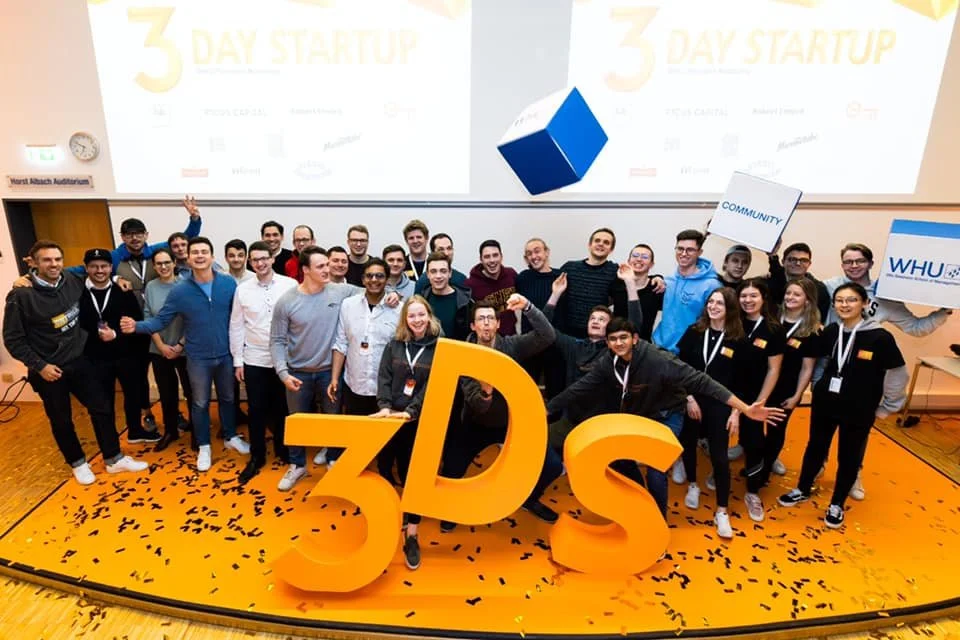
Igor came through a startup bootcamp I ran in Germany called 3 Day Startup. Half German, half Russian, he’d caught the startup bug hard. By the end he was dying to have his own startup. He learned how to pitch, how to build, how to lead teams at startup speed. He told me later it changed his life. And it did: He’s a founder now, running his own marketing agency.
We were in growth mode back then. Germany was our first country outside the United States, and it had gone well enough that I wanted to get the program into every country and community I could. When I mentioned that to Igor, he offered to help me get to Russia. It was more than repaying a favor. Russia was half of him, and he wanted his countrymen to have the experience he had.
So we started strategizing. Having just been through the 3 Day Startup, he knew what happens on day two: we send participants out into the street to talk to strangers. Stop someone, ask them questions about a problem you think you can solve. No matter how passionate you are about your startup idea, there’s always a distance between what’s in your head and what customers actually want. Customer discovery is how you find out what they want, so you can build that instead. Of everything in the program, this was the exercise that changed people the most. Not learning to build. Not learning to pitch. It was that most startups die because nobody does it.

He was telling me that the single most powerful exercise in my curriculum was unrunnable in his country. Not because Russians lack curiosity or ambition. Because where he’s from, a stranger approaching you with questions is probably a threat.
Almost everything about starting a company involves trust. You hire people you didn’t grow up with. You partner with cofounders who could walk off with the customer list. You bet that courts will enforce contracts if any of it goes sideways. Every single one of those is a bet on a stranger behaving well.
Americans never notice this, because in America the bet usually pays off. We do business with people we barely know, and it mostly works, and we think nothing of it. It might be the country’s most underrated asset. You only see it from the outside. I’ve run programs on the ground in 24 countries, and I always notice when I’m in one where the trust is missing.
Low trust doesn’t break everything at once. It breaks things in escalating order.
First it breaks contracts.
In the United States, when both parties sign a contract, it’s time to celebrate, because that means the deal is going to happen. The signature on the paper says you’re going to work together, so you’re going to work together.
Igor told me that in Russia, things are different. When both parties sign the contract, it means the deal is now roughly twenty percent more likely to actually happen. There’s still more relationship building to do, more proof that you’re not working an angle. Getting drunk together moves it another twenty percent.
Think about what that does to the speed of an economy. Every deal an American closes with a signature, a Russian closes with months of relationship maintenance, if it closes at all. Trust is a technology for skipping all of that. When it’s missing, every transaction pays a tax.
I know, because I paid it. The Russia program never happened. The partners we tried to bring on board didn’t believe we could pull it off. Maybe our track record was too thin. Maybe they just defaulted to not trusting outsiders. Either way, our connections weren’t deep enough to overcome it. I went in to teach people how to talk to strangers, and I got defeated by the reason they don’t.