
A few weeks ago I asked you to do something weird. Instead of filling out a survey, you pasted a prompt into your AI and sent me what it said about you. The survey focused on only two questions: what’s the highest-impact thing you’ve used it for, and what’s the highest-impact thing you could be using it for that you’re not.
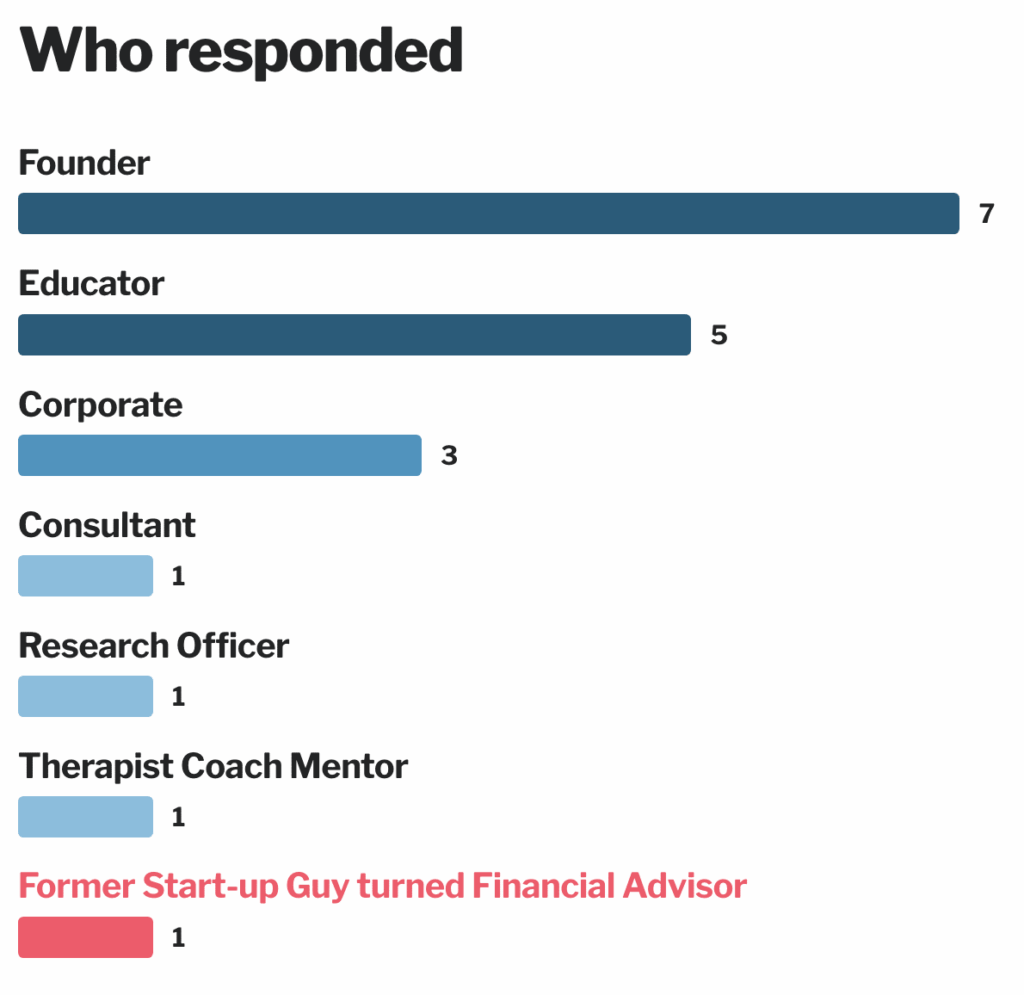
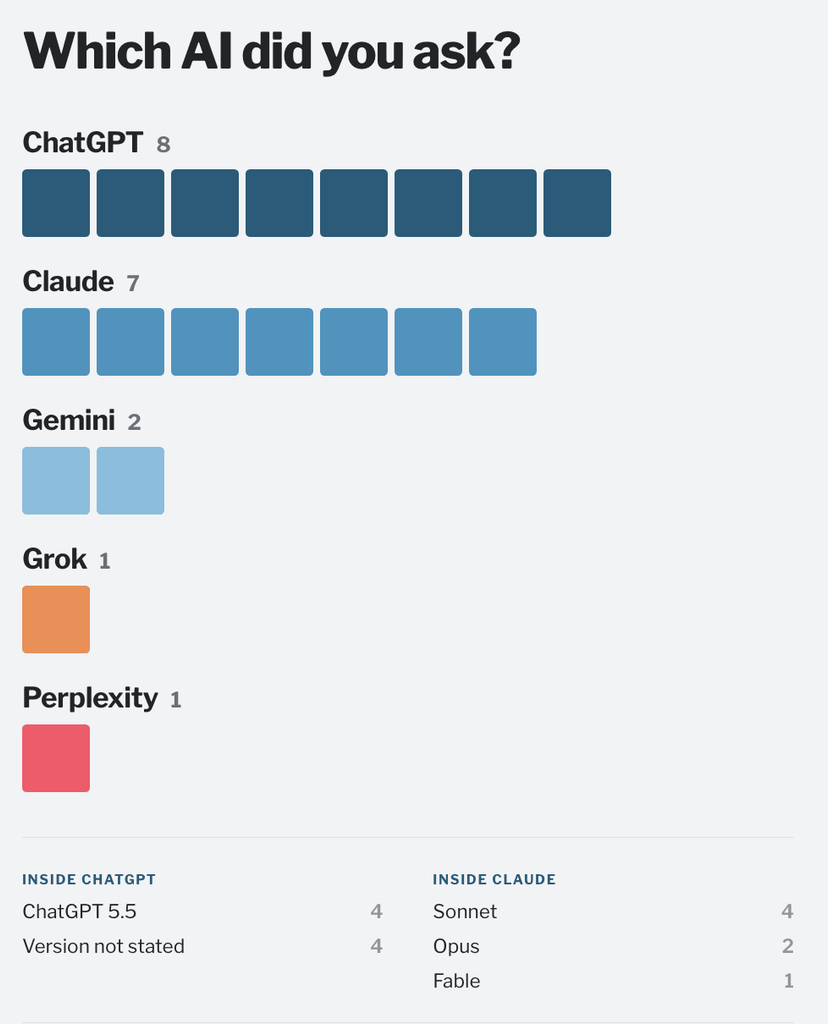
Nineteen of you completed the survey:
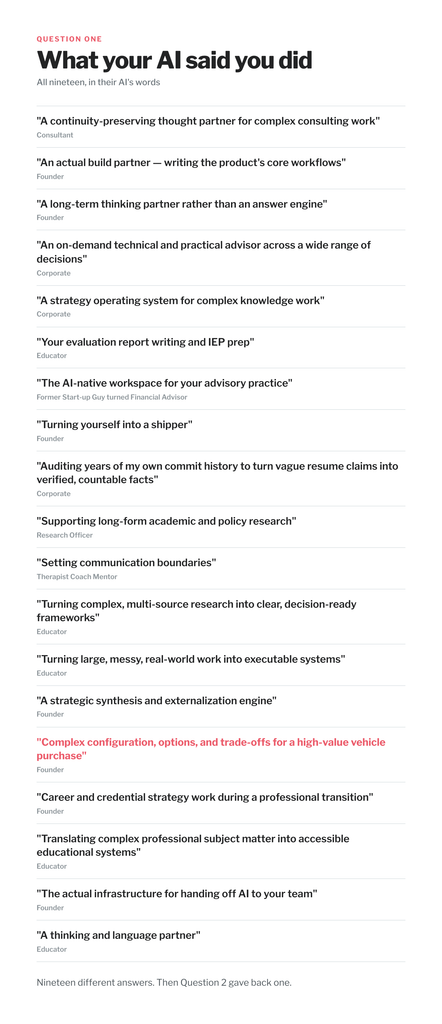
Your AI knows what you did
The answers to Question 1 (“what is the highest-impact thing I’ve used you [AI] for?”) were specific and seemed unique to each individual. One attorney’s AI knew that three colleagues had been given workspaces for intake, filing, and calendaring. It even knew the colleagues by name. A speech pathologist’s AI cited the evaluation report writing and knew exactly which clinical frameworks were in play. A financial advisor’s AI described the compliance guardrails and context files behind the advisory practice. An educator’s AI referenced the microcontroller-based response tools built for the classroom.
I’m the same way. I set up connectors in Claude so it can see my bank account, my inbox, and my computer. As a guy who talks to his computer constantly through dictation, this has been wildly helpful. I can say “start an email to so-and-so about the program dates” and go find it sitting in my drafts. I can ask what I spent last month and get an answer in seconds. The AI is very good at analyzing what already happened.
Your AI gives everyone the same advice
Question 2 (“What is the highest-impact thing I could be using you [the AI] for that I’m not?”) had a strange pattern. Fifteen of the nineteen said some version of the same thing: build an operating system. Create a knowledge base. Systematize your workflows. Make me the center of your work.
Different people, different jobs, different models, same shape of answer. You think with me, but you should build with me. You use me for individual projects, but you should make me permanent infrastructure.
ChatGPT in particular seemed obsessed with this. Five responses used the phrase “operating system” word for word, and all five of them were ChatGPT. Not one of the seven Claude responses used it.
I have no evidence for this, but it feels similar to how social media operates. These are products built to increase usage because it serves their business model. The forward-looking advice from your AI will always be “use me more.” It is structurally biased against saying “use me less” or “go talk to a person.” Brings to mind the saying “don’t ask a barber if you need a haircut.”
The humans were more interesting
I added an optional field for the human’s own take. Five people used it. Three of them pushed back on their AI’s advice.
Leslie, an educator, wrote: “The second half of that answer basically yielded an ad for me to use AI much more in my work. Is that what everyone gets with this prompt?”
Deja, a founder, said she’d keep doing things her way because she likes figuring things out herself. I’m still trying to find the right way to articulate this, but finding things out for yourself feels like an antidote to the cognitive laziness of trusting what AI gives you. I’m pretty sure that if we take AI’s advice uncritically without reasoning about it, we’re doomed.
Luke, an orthodontist, said: “I always think that AI can give me an easy to execute million dollar idea, but so far it turns out that everything still takes real work.”
Those three looked at fluent, confident output and decided not to take it at face value. That’s discernment, and it’s the skill that appreciates in value the more AI can produce.
The takeaway
Trust AI to tell you what you did. Be suspicious when it tells you what to do next.
Thanks to everyone who participated, and especially to the humans who talked back.
Thanks to everyone who completed the survey.