

The first time China really showed up on my radar was ten years ago when I read The Three-Body Problem—Liu Cixin’s sci-fi epic. I was stunned by its breadth and scope; the story spans millennia and puts China in the middle of a plot to unite every country in the world to defeat alien invaders (spoiler alert: long-term perspectives and putting yourself at the center of humanity are very Chinese ways of thinking).
But what really struck me was what it represented: a rare example of Chinese culture shaping Western imagination. Despite China’s long attention to the West, this kind of cultural export still feels unusual.
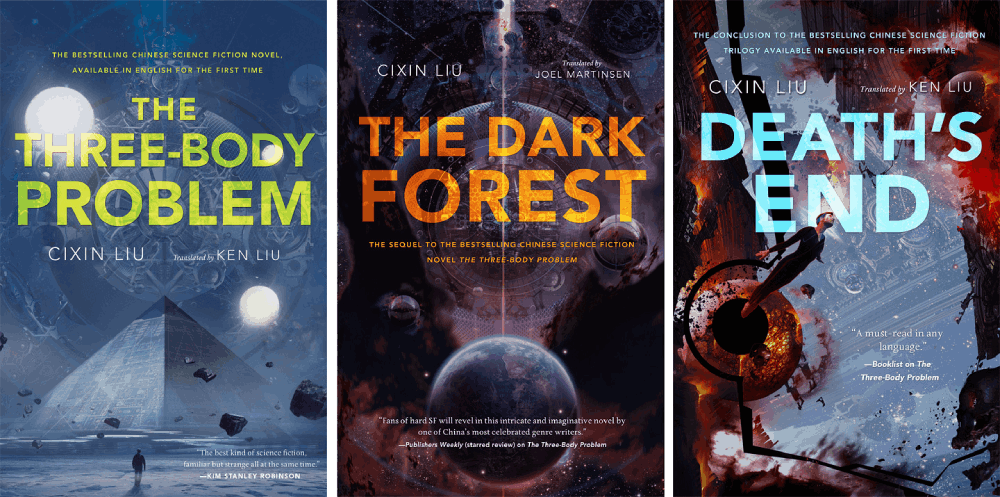
That book planted something in me. A sense that there’s more happening in China than most of us in the West seek to understand.
An Unexpected Conversation
“You wanna know what’s crazy about China? You can show up to some random event in Shenzhen and the next day you’re getting a tour of a factory to mass-produce an idea for a hardware product. The last time I was in Silicon Valley, it felt closed off. I didn’t know the right people so I didn’t get the right meetings. Shenzhen is open to outsiders in a way that Silicon Valley simply isn’t.”
This is what Hugo Condesa, a Portuguese entrepreneur now based in China, told me. A decade after reading The Three-Body Problem, I was running AI- and Innovation-focused workshops for visiting executive education students from ESCP, a European business school with campuses in Paris, Berlin, London, Madrid, and Warsaw. This was an international group with an international perspective, and Hugo’s comments made me feel like I’d been living in a bubble.
Which is a rare feeling for me. I’ve worked with entrepreneurs and innovators in 23 countries, from Rio de Janeiro to Madrid to Sydney to Seoul. But the closest I ever came to China was Hong Kong, and that was in 2004. But I do remember seeing people buy soft drinks at a 7-11 with their phones, which made the place feel like the future.
So is Shenzhen—China’s answer to Silicon Valley—more innovative and open than the original?
I certainly didn’t think so.
China looks top-down: government influence everywhere, a business environment where visibility and freedom can be complicated. Everyone knows the story of Ali Baba founder Jack Ma—one of the world’s most famous entrepreneurs disappears from public view, and the best guess is he said something that made the wrong people want to take him down a peg.

But Hugo’s words sent me down a rabbit hole. I started noticing more signals about exciting things happening in China that don’t seem widely understood in the West.
The Language Barrier Is Where the Alpha Is
A big part of this gap is language—and what language gates.
I do a lot of work in Latin America around startups and innovation. I speak Spanish but it’s not necessary. That ecosystem operates in English, so I can read the threads, follow the builders, watch ideas travel, and track what’s happening in real time. With China, we don’t see nearly as much the same way. The signal reaches us differently. Or not at all.
To borrow a term from investing, I think that gap is where the alpha is. That gap points to an information advantage, where you can learn something real before the broader world fully sees it.
What I’m Doing About It
So in 2026, one of my themes is Chinese entrepreneurship.
If you’ve been reading my newsletter for a minute, you know that this exploration aligns with exactly what the newsletter is about: AI, entrepreneurship, video, and strategies and tactics no one else is talking about. Studying China is going to surface lessons and insights about all of those things. That’s why it’s becoming a lens for me this year.
Here’s the plan:
- I’ll spend a week in Shenzhen—one of China’s most innovative cities—talking to founders and unpacking what I see (Timeframe: unknown)
- I’m working with my friend Coco Liu to publish something like The Westerner’s Guide to Chinese Entrepreneurship (or …to Chinese Startups—still deciding the title). Coco speaks Chinese and has a special interest in Special Economic Zones—Shenzhen being one of the most successful SEZs in the world
- We’ll be doing interviews with people actually embedded in those ecosystems
Two Asks
I need your help:
- Subscribe to my newsletter if you want to follow along the journey
- Do you know anyone connected to the Chinese startup ecosystem who might be up for an interview? Drop me a line through an X (DMs open), Linkedin, or email me at my name at actionworks dot co (not dot com).